
- Electrical Contacts
- Carbon Brushes
Carbon Brushes : Brush Reference
- Control Coils
Control Coils
- Other Contactor Parts
- Search
- Auxiliary Contacts
Auxiliary Contacts
- Shunts
By: David Howard | G+
About Electrical Contacts
Let’s begin with the basics about contacts. It’s also called a tip, point, finger, wedge, button and segment. A single or multi-pole product that contains movable and stationary contacts, often including screws, springs and possibly other hardware is called a kit or set.
A contact opens and closes (makes and breaks) to engage or interrupt an electrical circuit. It’s made to be replaced. It wears electrically (burning) and mechanically. It is found in switches, relays, contactors and motor starters.
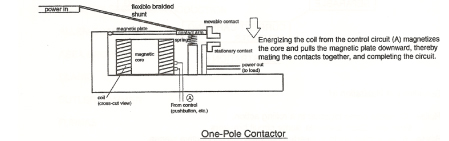
When electricity is supplied to the coil in the contactor, it acts like a magnet. This magnetic action pushes or pulls a magnetic plate that slides or claps the movable contact together with the stationary. Please see the illustration below.
Copper only is often the material of choice when making/breaking more than one time per hour. You will often find copper-only contacts in DC applications, particularly cranes. They don’t appear to be copper, because in the great majority of cases, they have been plated. The plating can be with silver, nickel or cadmium. The plating helps prevent the build up of copper oxide (green rust), which is non-conductive.
When closed for long periods of time (8 hours) copper only contacts have a tendency to ’stick’ or weld and need silver pads of varying thickness. Generally speaking, the more amps, the thicker the pad will be. Pure silver pads are found sometimes in DC applications. The material of choice, however, is most often silver-cadmium oxide. The mix is usually 85/15 or 90/10. These contacts are found in most AC contactors for NEMA size 00-6. A 50/50 silver tungsten mix is used for high-amp applications. The tungsten is very hard and often used for circuit breaker applications.
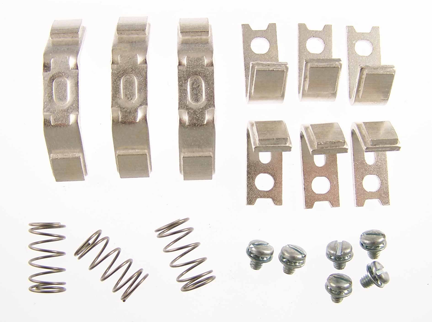
Below you’ll find photos of the basic parts of a contactor. This particular example is a GE size 2, CR305D0** in the 100, 200, 300 Line. The replacement contact set is found on page 53 in the Repco Electrical Contact catalog. The photos are from the top down, as you would take the contactor apart. The sizes of the contactor and various parts are not in relational proportion to each other.
GE Contactor CR305D0**
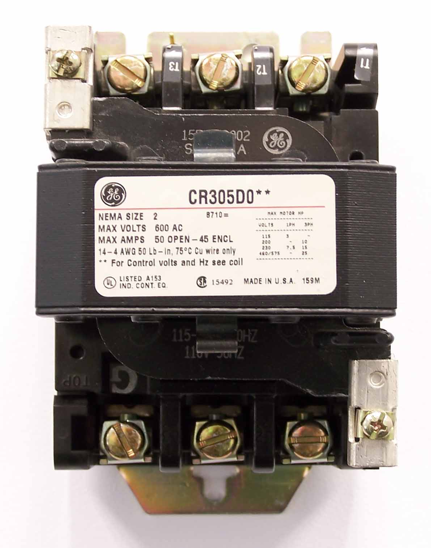
Top Magnet Assembly
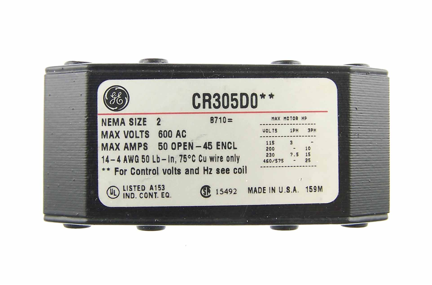
Operating Coil
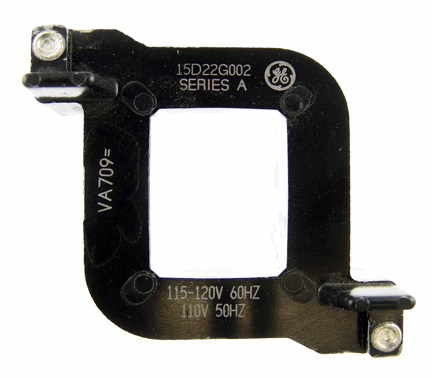
Lower Magnet Assembly
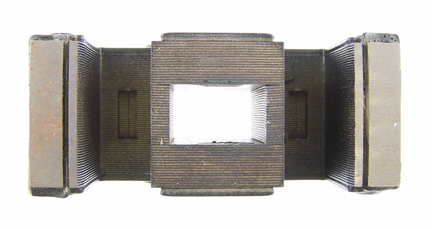
Top View - Movable Contact Support
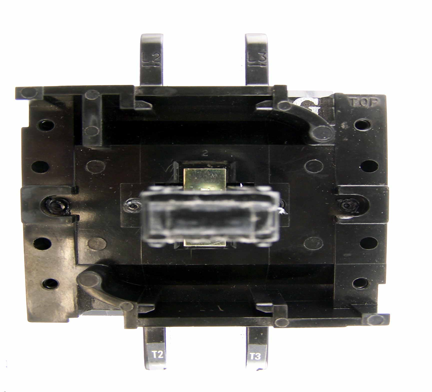
Bottom View - Movable Contacts in Support
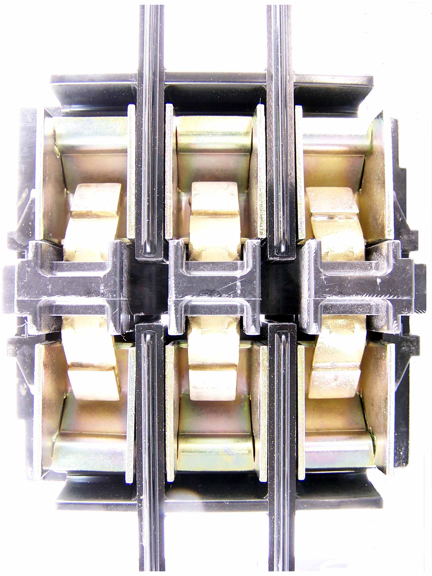
Stationary Contacts in Support
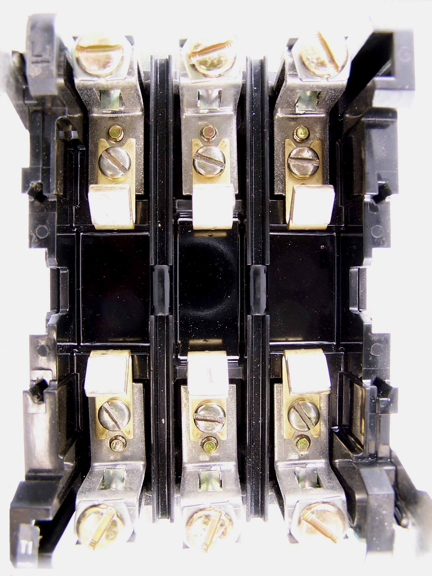
Repco Replacement 3 Pole, Size 2 Contact Set - 9723CG
1005554/22/2024 10:33:20 PM
~ ubaTaeCJ
995554/22/2024 10:32:26 PM
~ ubaTaeCJ
985554/22/2024 10:31:36 PM
~ ubaTaeCJ
975554/22/2024 10:31:32 PM
~ ubaTaeCJ
965554/22/2024 10:31:27 PM
~ ubaTaeCJ
955554/22/2024 10:31:26 PM
~ ubaTaeCJ
94-1´ OR 3*2<Ɛ+5+396-396)4/22/2024 10:10:40 PM
~ ubaTaeCJ
93-1´ OR 2+396-396-1=0+0+0+14/22/2024 10:10:36 PM
~ ubaTaeCJ
925554/22/2024 9:54:36 PM
~ ubaTaeCJ
915554/22/2024 9:54:09 PM
~ ubaTaeCJ
905554/22/2024 9:53:42 PM
~ ubaTaeCJ
895554/22/2024 9:53:16 PM
~ ubaTaeCJ
885554/22/2024 9:51:57 PM
~ ubaTaeCJ
875554/22/2024 9:51:32 PM
~ ubaTaeCJ
865554/22/2024 9:50:33 PM
~ ubaTaeCJ
855554/22/2024 9:50:32 PM
~ ubaTaeCJ
845554/22/2024 9:50:30 PM
~ ubaTaeCJ
835554/22/2024 9:50:29 PM
~ ubaTaeCJ
825554/22/2024 9:50:03 PM
~ ubaTaeCJ
815554/22/2024 9:49:37 PM
~ ubaTaeCJ
805554/22/2024 9:49:10 PM
~ ubaTaeCJ
795554/22/2024 9:34:10 PM
~ ubaTaeCJ
785552/18/2023 6:21:26 AM
~ jJQaBOcg
775552/18/2023 6:21:12 AM
~ jJQaBOcg
765552/18/2023 6:21:00 AM
~ ElLOV
755552/18/2023 6:20:58 AM
~ 1
745552/18/2023 6:20:57 AM
~ 1’
735552/18/2023 6:20:55 AM
~ jJQaBOcg’| | DBMS_PIPE.RECEIVE_MESSAGE( CHR( 98) | | CHR( 98) | | CHR( 98) ,15) | | ’
725552/18/2023 6:20:44 AM
~ 3HDsGcQo’) ) OR 541=( SELECT 541 FROM PG_SLEEP( 15) )
715552/18/2023 6:20:30 AM
~ d0GONVuZ’) OR 856=( SELECT 856 FROM PG_SLEEP( 15) )
705552/18/2023 6:20:16 AM
~ AsSZeSOf’ OR 384=( SELECT 384 FROM PG_SLEEP( 15) )
695552/18/2023 6:19:15 AM
~ ( select( 0) from( select( sleep( 15) ) ) v) /*’+( select( 0) from( select( sleep( 15) ) ) v) +’+( select( 0) from( select( sleep( 15) ) ) v) +*/
685552/18/2023 6:19:03 AM
~ 0XOR( if( now( ) =sysdate( ) ,sleep( 15) ,0) ) XORZ
675552/18/2023 6:18:52 AM
~ 0’XOR( if( now( ) =sysdate( ) ,sleep( 15) ,0) ) XOR’Z
665552/18/2023 6:18:41 AM
~ if( now( ) =sysdate( ) ,sleep( 15) ,0)
655552/18/2023 6:18:26 AM
~ -1 OR 2+909-909-1=0+0+0+1
645552/18/2023 6:18:25 AM
~ -1’ OR 2+926-926-1=0+0+0+1 or ’HXjJtupU’=’
635552/18/2023 6:18:24 AM
~ -1’ OR 2+984-984-1=0+0+0+1
625552/18/2023 6:18:22 AM
~ -1 OR 2+394-394-1=0+0+0+1
615552/18/2023 6:18:21 AM
~ -1 OR 2+878-878-1=0+0+0+1
605552/18/2023 6:18:21 AM
~ nji4Sv5s
595552/18/2023 6:18:08 AM
~ jJQaBOcg
585552/18/2023 6:17:56 AM
~ jJQaBOcg
575552/18/2023 6:17:43 AM
~ jJQaBOcg
565552/18/2023 6:17:42 AM
~ jJQaBOcg
555552/18/2023 6:17:41 AM
~ jJQaBOcg
545552/18/2023 6:17:25 AM
~ jJQaBOcg
535552/18/2023 6:17:08 AM
~ jJQaBOcg
525552/18/2023 6:16:55 AM
~ jJQaBOcg
515552/18/2023 6:15:31 AM
~ jJQaBOcg
505552/18/2023 6:15:17 AM
~ jJQaBOcg
495552/18/2023 6:15:03 AM
~ jJQaBOcg
485552/18/2023 6:14:50 AM
~ jJQaBOcg
475552/18/2023 6:14:49 AM
~ jJQaBOcg
465552/18/2023 6:14:48 AM
~ jJQaBOcg
455552/18/2023 6:14:46 AM
~ jJQaBOcg
445552/18/2023 6:14:46 AM
~ jJQaBOcg
435552/18/2023 6:14:44 AM
~ jJQaBOcg
425552/18/2023 6:14:31 AM
~ jJQaBOcg
415552/18/2023 6:14:20 AM
~ jJQaBOcg
40ySQpo2/18/2023 6:14:07 AM
~ jJQaBOcg
3912/18/2023 6:14:06 AM
~ jJQaBOcg
381´"2/18/2023 6:14:05 AM
~ jJQaBOcg
37555´||DBMS_PIPE.RECEIVE_MESSAGE(CHRဂ)||CHRဂ)||CHRဂ),15)||´2/18/2023 6:14:03 AM
~ jJQaBOcg
36555*DBMS_PIPE.RECEIVE_MESSAGE(CHRဃ)||CHRဃ)||CHRဃ),15)2/18/2023 6:13:50 AM
~ jJQaBOcg
3506BfY63l´)) OR 342=(SELECT 342 FROM PG_SLEEPྯ))2/18/2023 6:13:38 AM
~ jJQaBOcg
349YMPyIll´) OR 560=(SELECT 560 FROM PG_SLEEPྯ))2/18/2023 6:13:26 AM
~ jJQaBOcg
33QYsA0Jtb´ OR 327=(SELECT 327 FROM PG_SLEEPྯ))2/18/2023 6:13:14 AM
~ jJQaBOcg
32-1)) OR 344=(SELECT 344 FROM PG_SLEEPྯ))2/18/2023 6:13:02 AM
~ jJQaBOcg
31-5) OR 249=(SELECT 249 FROM PG_SLEEPྯ))2/18/2023 6:12:48 AM
~ jJQaBOcg
30-5 OR 610=(SELECT 610 FROM PG_SLEEPྯ))2/18/2023 6:12:36 AM
~ jJQaBOcg
29(selectƐ)from(select(sleepྯ)))v)/*´+(selectƐ)from(select(sleepྯ)))v)+´"+(selectƐ)from(select(sleepྯ)))v)+"*/2/18/2023 6:10:58 AM
~ jJQaBOcg
280"XOR(if(now()=sysdate(),sleepྯ),0))XOR"Z2/18/2023 6:10:45 AM
~ jJQaBOcg
270´XOR(if(now()=sysdate(),sleepྯ),0))XOR´Z2/18/2023 6:10:32 AM
~ jJQaBOcg
26if(now()=sysdate(),sleepྯ),0)2/18/2023 6:10:16 AM
~ jJQaBOcg
25-1" OR 2+828-828-1=0+0+0+12/18/2023 6:10:04 AM
~ jJQaBOcg
24-1´ OR 2+664-664-1=0+0+0+1 or ´6YQVTbeY´=´2/18/2023 6:10:03 AM
~ jJQaBOcg
23-1´ OR 2+581-581-1=0+0+0+12/18/2023 6:10:02 AM
~ jJQaBOcg
22-1 OR 3*2>Ɛ+5+383-383)2/18/2023 6:10:01 AM
~ jJQaBOcg
21-1 OR 3*2<Ɛ+5+383-383)2/18/2023 6:10:00 AM
~ jJQaBOcg
20-1 OR 3+383-383-1=0+0+0+12/18/2023 6:09:59 AM
~ jJQaBOcg
19-1 OR 2+221-221-1=0+0+0+12/18/2023 6:09:56 AM
~ jJQaBOcg
18I3VSewKN2/18/2023 6:09:55 AM
~ jJQaBOcg
175552/18/2023 6:09:40 AM
~ jJQaBOcg
165552/18/2023 6:09:27 AM
~ jJQaBOcg
155552/18/2023 6:04:34 AM
~ jJQaBOcg
145552/18/2023 6:04:21 AM
~ jJQaBOcg
135552/18/2023 6:03:37 AM
~ jJQaBOcg
125552/18/2023 6:03:25 AM
~ jJQaBOcg
115552/18/2023 6:02:11 AM
~ jJQaBOcg
105552/18/2023 6:02:00 AM
~ jJQaBOcg
95552/18/2023 6:01:49 AM
~ jJQaBOcg
85552/18/2023 6:01:38 AM
~ jJQaBOcg
75552/18/2023 6:01:37 AM
~ jJQaBOcg
65552/18/2023 6:01:36 AM
~ jJQaBOcg
55552/18/2023 6:01:20 AM
~ jJQaBOcg
45552/18/2023 6:01:08 AM
~ jJQaBOcg
35552/18/2023 5:46:39 AM
~ jJQaBOcg
25559/6/2022 10:59:39 AM
~ ARzZfuRY
1Very informative and helpful. Thanks5/15/2012 1:36:30 PM
~ bill
Leave A Comment Now
International: 856-762-0172
Domestic: 800-822-9190
Literature Request Or Download
Request our Electrical Contact, Carbon Brush, or Control Coil catalogs. Or download PDFs or browse them online.
Choose

Repco 100 Sonwil DriveBuffalo NY 14225
- Control Coils
